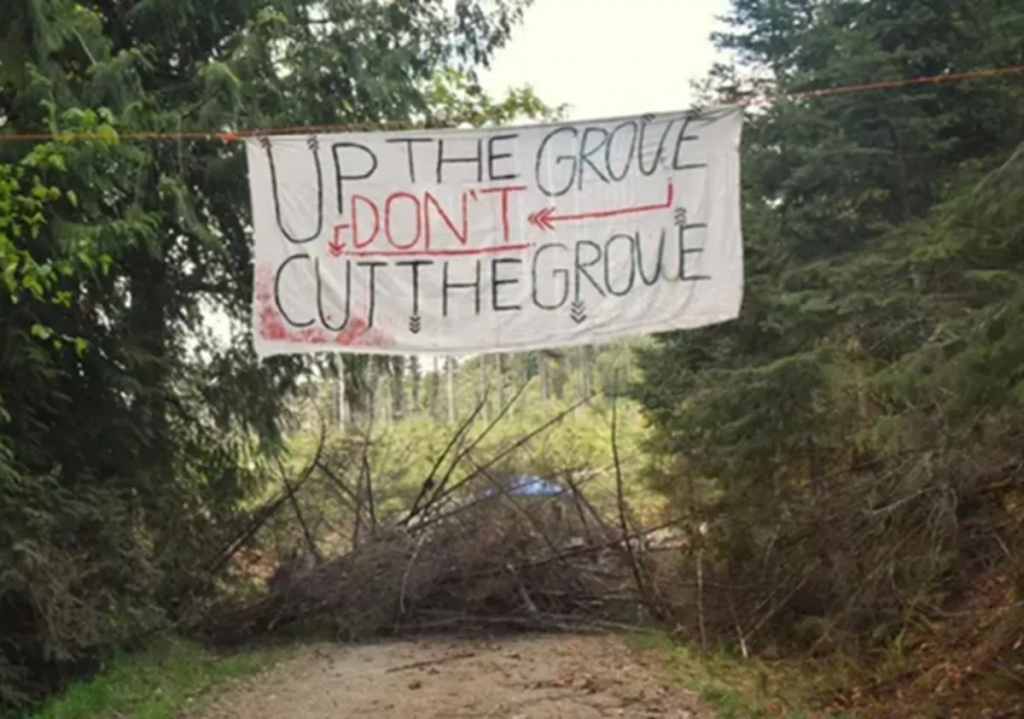
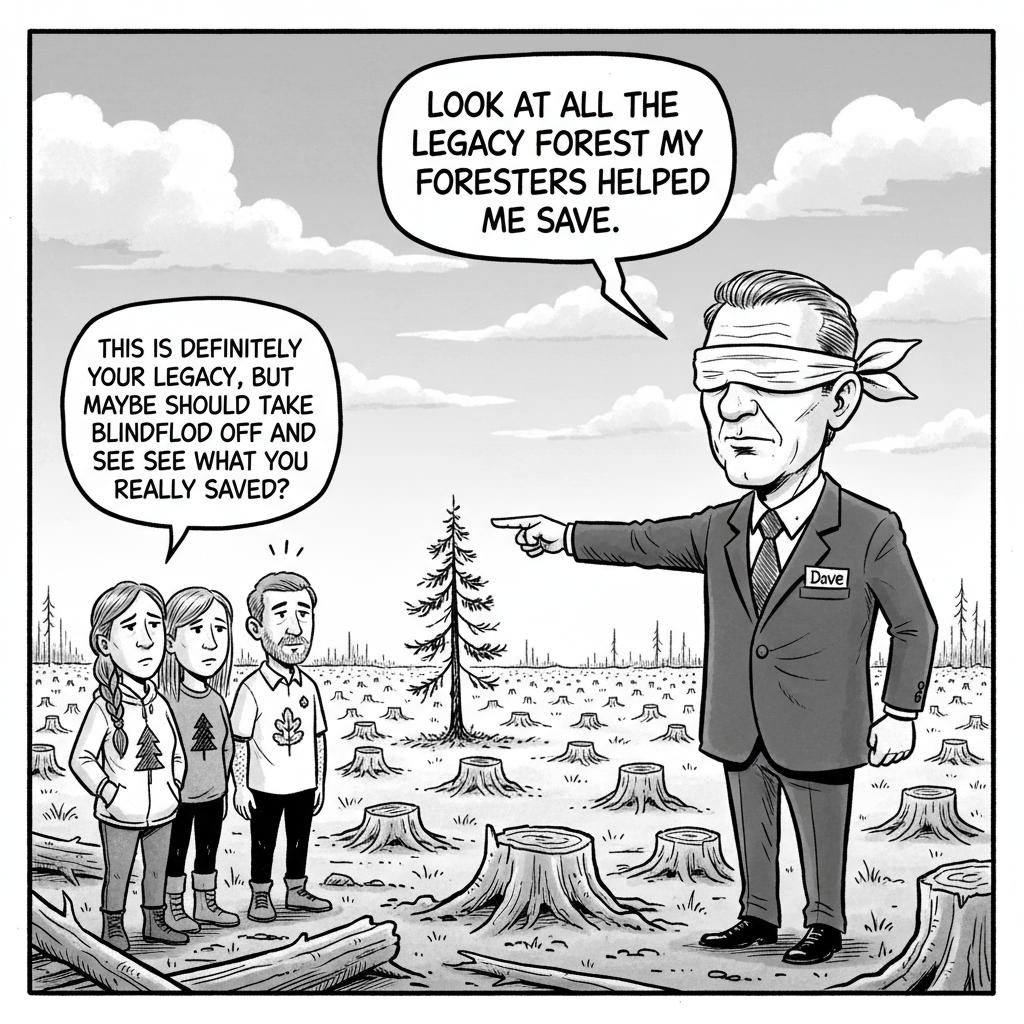
Commissioner Dave Upthegrove—elected on the promise to defend Washington’s legacy forests—has unveiled a conservation plan so flawed it resurrects the methodology of “ghost forests” of the U.S. Forest Service in the ’80s and ’90s.
The Phantom Forest Phenomenon
In the late 20th century, the Forest Service indulged in a forest-management fiction: they provided data that their forests were growing wood faster and trees were more abundant than they had previously thought. These “ghost forests” never existed in reality—they were manipulated data points designed to justify more logging, even though these locations of valuable forest were deforested or only had stunted unmerchantable trees growing.
In a 1995 report, the Associated Press detailed how the Forest Service ultimately admitted it had counted “phantom forests” to justify inflated timber-cutting targets:
“The U.S. Forest Service has finally admitted what two environmental groups have been saying for eight years: the Kootenai National Forest used ‘phantom trees’ to justify the timber-cutting targets in its management plan.”“The Kootenai inflated its timber promises and its budget by claiming it has more big trees than are really there.”
The Spokesman-Review – https://www.spokesman.com/stories/1995/dec/02/usfs-counted-phantom-trees-agency-admits-timber
A 1994 General Accounting Office (GAO) report, as covered by the Associated Press, also confirmed these inflated projections across national forests:
“The practice produces what are known as ‘phantom forests,’ resulting in an exaggerated estimate of how many trees can be removed without causing irreversible damage to the resource.”
“Forest Service historically miscounted its trees. The GAO report concludes … the agency was badly overestimating the number of trees it could cut down without severely damaging some of the Northwest’s most productive national forests.”
Upthegrove’s 77,000-Acre Betrayal
On August 26, 2024, Commissioner Upthegrove announced the protection of 77,000 acres of so-called “legacy forests.” His proclamation was hailed as a centerpiece of environmental progress. But a deeper investigation reveals the same pattern of illusion: flawed mapping, political theater, and a promise destined to evaporate.
Joshua Wright of the Legacy Forest Defense Coalition was among the first to call foul. He quickly discerned 25,000 acres of “mapping errors” hidden within Upthegrove’s figures areas not fitting the described definition of “legacy forest,” or that overlapped with harvest zones scheduled to move forward with more logging anyway. In effect, nearly a third of the celebrated conservation acreage may be spectral—ghosts in the data.
Upthegrove’s announcement is not a victory—it’s a mirage. Haunted by 25,000 acres of mapping errors, manipulated data, and the continuation of all existing legacy forest timber sales, the plan embodies the ghost forests trope: forests that exist only on paper, not on the ground.
In essence, Upthegrove is telling environmentalists he will protect these rare forests—but only the ones we didn’t plan to log till five years from now, and his term as commissioner will be expired by then and there’s nothing binding to his protection promise beyond his term in office.
His action appears less like stewardship and more like political sleight-of-hand—a betrayal of the environmentalists who believed in him and worked hard to get him elected.